Refinishing cost, and why the range is so wide
$0.85–$7 / sq ft — A separate, cheaper price band from installing new hardwood. That spread is not sloppiness in the data; it reflects two genuinely different jobs sold under one word. Compared with new hardwood at $8–$10 / sq ft installed in Reno, even the top of the refinishing range is the cheaper path when the wood underneath is sound.
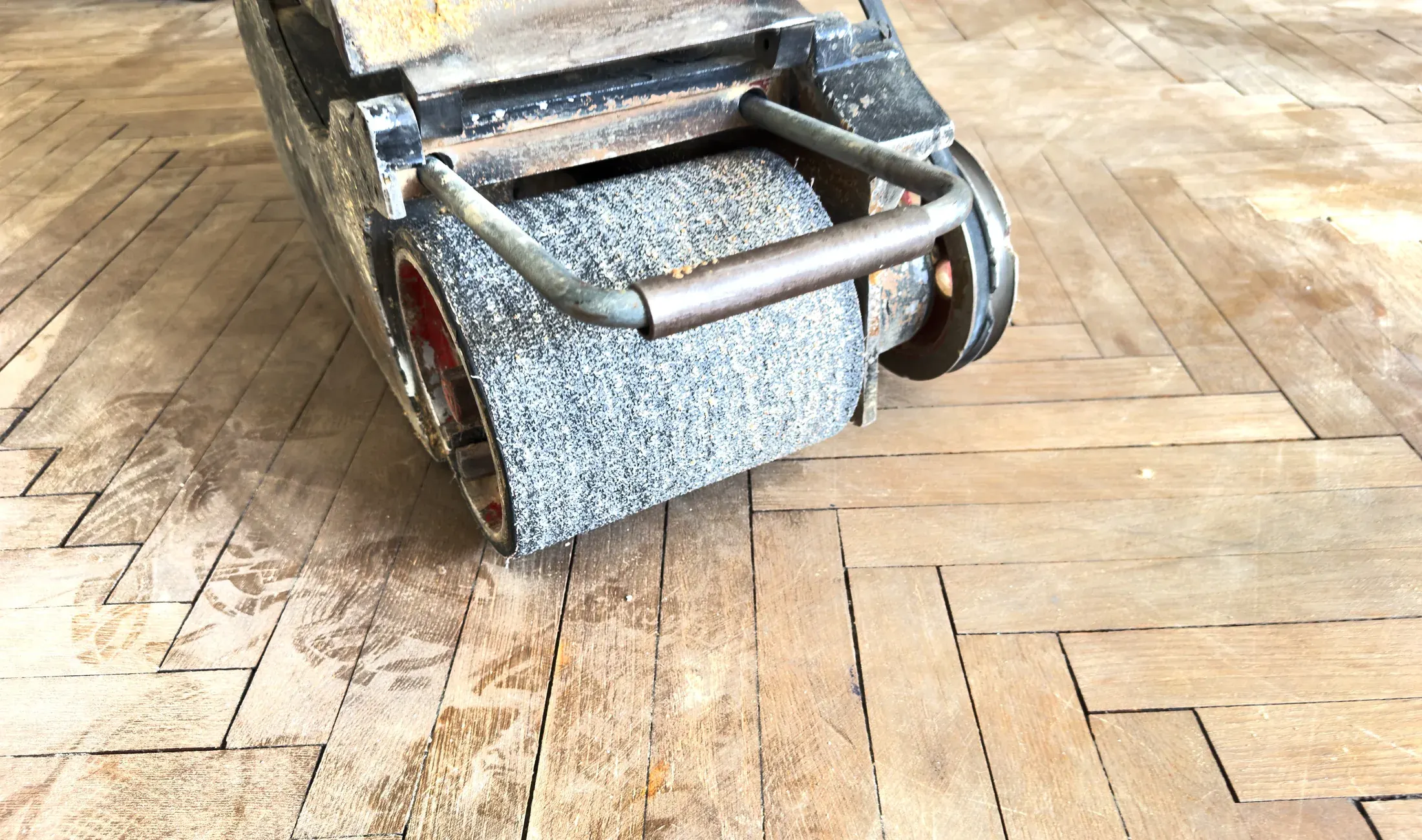
| Job type | What it involves | Where it sits in the range |
|---|---|---|
| Screen-and-recoat | Light abrasion of the existing finish, one new top coat; no bare wood, no color change | Low end |
| Full sand and refinish, natural | Sand to bare wood, minor repairs, two to three coats of finish | Middle |
| Full sand, stain, and refinish | Everything above plus a stain step and the extra dry time it needs | Upper middle |
| Refinish with repairs | Board replacement, deep gouge or pet-stain work, then the full refinish | High end |
What moves the price within that range:
- Screen-and-recoat (cheapest) vs. full sand-and-refinish (most expensive)
- Number of coats and finish type (oil-based vs. water-based polyurethane)
- Floor condition — deep gouges, pet stains, or water damage add labor
- Stain color change adds a step over a natural-tone refinish
Honest caveat: this is the one material on this site without a Reno-specific figure. The range is a labeled national proxy and is presented as such everywhere it appears, not blended into the Reno numbers. It will be replaced the moment a sourced Reno refinishing dataset exists.
What that looks like for a typical room
| Area | Screen-and-recoat (near $0.85/sq ft) | Full refinish (toward $7/sq ft) |
|---|---|---|
| 200 sq ft (one bedroom) | About $170 | Up to about $1,400 |
| 500 sq ft (living/dining) | About $425 | Up to about $3,500 |
| 1,000 sq ft (main level) | About $850 | Up to about $7,000 |
Most real quotes land between those two columns. The point of showing both ends is that a $900 quote and a $5,000 quote for the same 1,000 sq ft can both be legitimate — they are quoting different work. Make sure every bid names which job it is.
Which job does your floor actually need?
A screen-and-recoat is enough when the finish is dull or lightly scratched but the scratches have not gone through to raw wood, there is no gray or black discoloration, and you are happy with the current color. A quick test: put a few drops of water on a worn area. If it beads, the finish is intact and a recoat will bond; if it soaks in and darkens the wood, the finish is gone in that spot and a recoat alone will not fix it.
A full sand and refinish is needed when scratches reach bare wood, boards have grayed from sun or water, there are pet stains, or you want a different color. It is also the only option if a previous recoat was done over a waxed or contaminated surface and is now peeling.
Neither is the right call when boards are cupped or crowned from moisture, when there is not enough wear layer left to sand, or when subfloor problems are showing through. At that point replacement is the more honest recommendation, even though it costs more — the refinish-vs-replace comparison walks through that decision with the cost figures side by side.
The Reno factor: dry air, gaps, and dust
Reno's indoor air runs dry for much of the year, and dry wood shrinks. On an older solid floor that shows up as small seasonal gaps between boards — widest in late summer, narrowest in winter when heating season humidity rises indoors. A refinish does not close seasonal gaps, and filling them with wood filler in the dry season often means the filler cracks or pops out when the boards swell again. A refinisher who asks what time of year the gaps look worst, and whether you run a humidifier, is asking the right questions. The climate and flooring page covers the moisture side in more depth.
On the practical side: sanding generates fine dust. Most Reno refinishers now run dust- containment sanders, but ask specifically — it changes both cleanup and how long the house is unlivable. Water-based finishes cure faster and smell less than oil-based; oil-based ambers over time and is often preferred on older red oak for a traditional look. Either is a legitimate choice; the quote should say which one it assumes.
What a complete refinishing quote includes
- Which job: screen-and-recoat or full sand, stated plainly.
- Square footage measured, not estimated from a floor plan.
- Finish type and number of coats (water-based vs. oil-based polyurethane; two coats vs. three).
- Stain — included or not, and whether a sample area will be tested first.
- Repairs itemized separately: board replacement, filler, transition pieces.
- Furniture moving and baseboard/shoe-molding handling — in scope or yours to do.
- Timeline including cure time before furniture and rugs go back.
- Company name and NSCB license number on the quote itself (NRS 624.720 requires it in contractor advertising) and a deposit no larger than the lesser of $1,000 or 10% (NRS 624.970).
What license should a refinisher hold?
Hardwood finishing and refinishing fall under Nevada's NSCB Classification C-16a ("Covering Floors"). Refinishing-only operators sometimes run small, and a real license lookup matters more here than on a large installation — one of the ten Reno companies profiled on this site returned no NSCB match at all under any spelling of its name. See the contractor vetting guide for the six-step lookup at https://app.nvcontractorsboard.com, and the C-16a vs. C-20 license guide for what the classifications mean.
Methodology
Reno-specific per-square-foot ranges (hardwood, LVP/vinyl, laminate, carpet, tile) are compiled from a September 2026 Reno-market pull covering hundreds of local quotes, including a 778-quote hardwood-specific dataset standardized to a 1,282 sq ft home (RENO-017). Where no Reno-specific figure exists — hardwood floor refinishing — the range shown is a national proxy (Angi, updated July 2026) and is labeled as national, not local, wherever it appears. Ranges are materials + labor for a typical installation and do not include subfloor repair, furniture moving, or old-flooring removal/disposal unless stated. Rechecked quarterly.
Verified 2026-09-03. See the full cost guide for every material side by side, and the hardwood installation cost page for the new-floor lane.